The nicotine and spike protein idea is a hypothesis that the spike protein of SARS-CoV-2 interferes with the body's nicotinic acetylcholine receptors, and that nicotine, which binds those same receptors, could counter that interference. It has been looked at in computer models and in the laboratory several times since 2020, however there is limited information about it available online, and most people meet it through a podcast or a video rather than a paper. We have set out the research behind it here, in the order it was published.
In short, the idea began with a 2020 hypothesis paper that spotted a resemblance between part of the spike protein and known snake toxins. Computer modelling studies in 2020 and 2021 backed the proposed interaction, a 2022 laboratory test did not find it, and the idea has since moved into long COVID research. Dr Bryan Ardis has no connection to FMI Patches.
Where the idea started
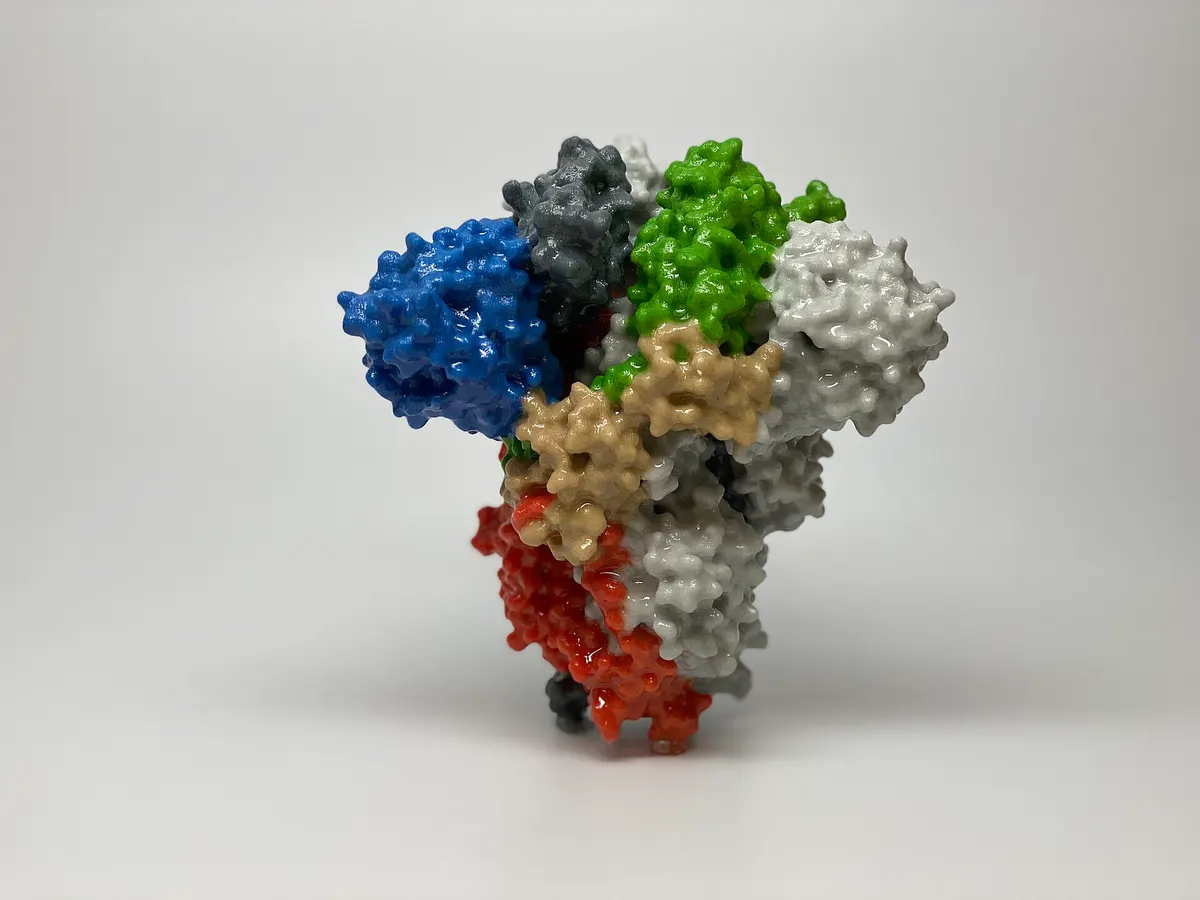
In 2020, Jean-Pierre Changeux of the Institut Pasteur and colleagues published "A nicotinic hypothesis for Covid-19 with preventive and therapeutic implications" in Comptes Rendus Biologies. The paper proposes that nicotinic acetylcholine receptors play a critical role in SARS-CoV-2 infection. Its key observation is a short sequence in the spike protein that resembles known blockers of these receptors, including alpha-bungarotoxin, a toxin found in snake venom.
These are the same receptors that nicotine acts on throughout the nervous system, and that shared target is what ties the two subjects together. If part of the spike protein behaves like a receptor blocker, the reasoning goes, then a molecule that binds the same receptor might compete with it. The paper suggests that nicotine should be studied against exactly that background, for both prevention and therapy.
Why snake venom comes into it
Snake venom comes into the story because several of the best known nicotinic receptor blockers are snake toxins. Alpha-bungarotoxin binds these receptors so tightly that researchers have used it for decades to label and study them. When the Changeux paper pointed out that a stretch of the spike protein looks like these toxins, it gave the nicotine idea a vivid picture that has stuck.
A second group took the comparison further. In 2021, Lagoumintzis and colleagues described a toxin-like sequence in the receptor-binding region of the spike protein, in Food and Chemical Toxicology. They also report that this region sits among the most conserved parts of the spike protein across SARS-related coronaviruses, which means it has stayed much the same as the viruses changed. That resemblance is the scientific root of the snake venom comparison that features in Dr Ardis's talks.
What the computer models found
The next step was computer modelling. In a 2020 preprint, Oliveira and colleagues simulated a 12-residue stretch of the spike protein docking onto three nicotinic receptor types, including a human alpha-7 receptor and a muscle-type receptor from the Californian electric ray. They ran three replicate simulations for each complex, each 300 nanoseconds long, and their title states that the simulations support the interaction. In the alpha-7 model, the binding pattern raised the possibility that the spike fragment encourages the receptor to open rather than blocking it, and the authors call for structural, mutational and single-channel studies to test it.
In 2021, Alexandris and colleagues used computer docking in Toxicology Reports to test nicotinic receptor agonists, nicotine among them, against the spike protein. Their conclusion is that the potential effects of nicotine and other cholinergic agonists should be investigated in the laboratory and in living systems. Taken together, these modelling papers turned a resemblance on paper into a specific, testable proposal about which part of the spike protein meets which receptor.
Computer models, 2020 to 2021
- A 12-residue spike protein stretch docked onto nicotinic receptors
- Three 300-nanosecond simulations per receptor complex
- Nicotinic agonists, nicotine among them, docked against the spike protein
- A toxin-like sequence in the receptor-binding region
Laboratory test, 2022
- Spike peptides tested against human alpha-7 receptors in cells
- The whole S1 domain tested on the receptor's electrical activity
- Authors conclude the binding is unlikely to be a relevant aspect of the disease
The laboratory test
The binding step was tested directly by Godellas, Cymes and Grosman, in PNAS in 2022. They measured whether spike protein peptides compete with a labelled toxin for human alpha-7 receptors grown in cells, and they tested the whole S1 domain of the spike protein on the receptor's electrical activity. Applied alone, the S1 domain produced no currents, and applied with acetylcholine it did not clearly change them. The authors conclude that this binding "is unlikely to be a relevant aspect of this complex disease."
Where the idea has gone since
The receptor idea did not stop there. It has moved into long COVID, where it is now most active. In a 2025 paper in Bioelectronic Medicine, Leitzke and colleagues propose that in long COVID the spike glycoprotein stays attached to nicotinic receptors and blocks them, and that nicotine can displace it and let normal signalling resume. They describe a patient whose speech returned after a short course of low-dose nicotine, and a survey of 231 users in which 73.5% reported a significant improvement. Our guide to nicotine patches and long COVID covers that paper in full.
In people with acute COVID-19, nicotine patches have been tested in one large randomised trial. NICOVID-REA, published in Intensive Care Medicine in 2022, gave a 14 mg patch or a placebo to 218 ventilated patients and found the same death rate at day 28, 28%, in both groups. Because those patients were already in intensive care, the trial was not able to test prevention.
What Dr Ardis has said
Dr Bryan Ardis has talked about nicotine and the spike protein on his own show and on other programmes. A 2024 episode of his show is titled "The Other N Word", and its page describes a three-hour presentation on nicotine. He also appears as a guest on a Man in America episode titled "What the FDA is Hiding About Nicotine". The venom resemblance described in the 2020 and 2021 papers is a recurring theme of his talks, including the 2024 talk on nicotine and venom peptides below.
Dr Ardis has no connection to our store and does not endorse our patches.
Nicotine and venom peptides, with pharmacist Ben Fuchs
Uploaded by Mike Adams · Sep 10, 2024
Watch on RumbleA 2024 talk on nicotine and venom peptides, with pharmacist Ben Fuchs.
Further reading
- Changeux et al.: A nicotinic hypothesis for Covid-19 with preventive and therapeutic implications (Comptes Rendus Biologies, 2020)
- Lagoumintzis et al.: Nicotinic cholinergic system and COVID-19: In silico identification of interactions between α7 nicotinic acetylcholine receptor and the cryptic epitopes of SARS-Co-V and SARS-CoV-2 Spike glycoproteins (Food and Chemical Toxicology, 2021)
- Oliveira et al.: Simulations support the interaction of the SARS-CoV-2 spike protein with nicotinic acetylcholine receptors (bioRxiv preprint, 2020)
- Alexandris et al.: Nicotinic cholinergic system and COVID-19: In silico evaluation of nicotinic acetylcholine receptor agonists as potential therapeutic interventions (Toxicology Reports, 2021)
- Godellas, Cymes and Grosman: An experimental test of the nicotinic hypothesis of COVID-19 (PNAS, 2022)
- Leitzke et al.: Long COVID: a critical disruption of cholinergic neurotransmission? (Bioelectronic Medicine, 2025)
- Labro et al.: Nicotine patches in patients on mechanical ventilation for severe COVID-19, NICOVID-REA (Intensive Care Medicine, 2022)
- Man in America: What the FDA is Hiding About Nicotine, an episode with Dr Bryan Ardis as a guest
The linked research covers each ingredient on its own and is not a study of this patch. These statements have not been evaluated by the FDA or the TGA. This product is not intended to diagnose, treat, cure, or prevent any disease.